Lotus Spa Wandsworth Town
535 Old York Road Wandsworth SW18 1TG
Lotus Spa Wandsworth Common
2 Bellevue Parade Wandsworth Common SW17 7EQ
Pigmentation.
What can I do about it?
What is pigmentation?
Sun spots, liver spots and freckles are examples of unwanted pigmentation and are often associated with skin ageing, or over exposure to the sun or sunbeds.
Age spots start to appear from the age of 40+ when the skin is less able to regenerate. Generally posing no health risk, age spots can be unsightly and adversely affect wellbeing.
Freckling and age spots are effectively and quickly removed or lightened with Intense Pulse Light (IPL) without risk in just a few easy treatments.
What are my treatment options?
IPL Laser treatment releases short pulse of filtered light which is readily absorbed by the high concentration of melanin found within the pigmentation, freckles, sun spots or liver spots. The rapid absorption of light energy heats the melanin and eradicates the melanin-rich cell. The treated skin area will darken in the first few days after treatment and then the excess melanin sheds away.
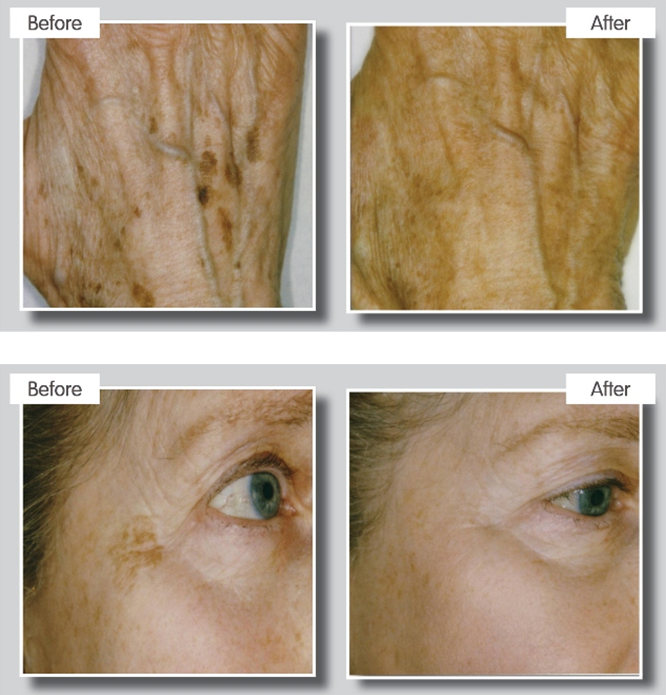
Q&A for Pigmentation treatments...
Who is suitable for IPL laser treatment?
Most people are suitable for treatment. Large, raised and dark pigment, dark moles and melasma cannot be treated and may need to be medically assessed.
What does IPL laser skin treatment feel like?
Treatment is mildly uncomfortable and a warm, tingling sensation not unlike sunburn may be experienced afterwards.
What does skin look like after an IPL laser treatment?
The skin may be slightly red and the pigment marks will darken and will darken before fading away.
Home care products...
Of course, your at-home regimen is also vitally important. After cleansing in the morning, use Dermalogica Day Bright SPF15, which contains optical illuminators, and will help protect your skin from further sun damage while actually helping to combat melanin production on the cellular level. At night after cleansing, use Dermalogica Daily Microfoliant®, a Rice-based powder that smoothes and brightens the skin. Then apply Night Bright, which penetrates deep into the skin and delivers a potent dose of eleven botanical brighteners to regulate melanin production.
How much you can reduce the appearance of hyperpigmentation depends largely on what is causing the problem in the first place, as well as how deeply into the skin it extends.
Generally speaking, most people see results within 8-10 weeks of beginning a treatment program. Keep in mind, however, that all sun exposure must be avoided during this time – even one unprotected day in the sun can completely reverse all positive treatment results.
How do I prevent it?
It is caused by a myriad of factors, which include sun damage, hormonal imbalance, and skin trauma or disease. Of all these causes, sun damage is both the most common, and the most easily prevented! Simply applying a sunscreen with a minimum SPF15 every day, and avoiding peak sun times around midday, will do a lot to prevent the sun damage that can make your skin’s pigment act up. Dermalogica Solar Defense Booster SPF30 provides optimum daily sun protection.
Hormonal imbalance mostly affecting women, can occur during any time that the body’s natural hormone balance is disturbed. These triggers can include hormonal changes, such as those that happen during the menstrual cycle, menopause, prolonged stress, pregnancy or even when taking birth control pills. Unlike pigmentation related to trauma or sun damage, hormonally-induced hyperpigmentation generally disappears when balance is restored to the body, and it can be treated during the interim period with topical skin brighteners.
It is related to skin trauma (cuts, wounds, scrapes and the like) is difficult to prevent in the case of accidental damage to the skin. Picking at acne lesions is also, of course, a big no-no, and will only exacerbate the problem associated with the wound healing.
IPL Laser with Dermalogica skin brightening Facial in Wandsworth, Earlsfield, Southfields, Wimbledon, Putney, Fulham, Battersea, Clapham, Chealse, Vauxhall, Victoria...